





At the Victorian Institute of Teaching (VIT), protecting children and young people is at the heart of everything we do. We ensure that only suitable and qualified teachers are registered to teach in Victoria.

Under the Education and Training Reform Act (2006), we’re required to consider the safety and wellbeing of children whenever we perform our regulatory functions, including community expectations.

All registered teachers have been assessed as suitable and fit to teach. We also maintain a public register of teachers, a register of disciplinary action and a register of disciplinary decisions. These registers promote transparency and accountability and demonstrate our commitment to child safety. 

Our approach to child safety

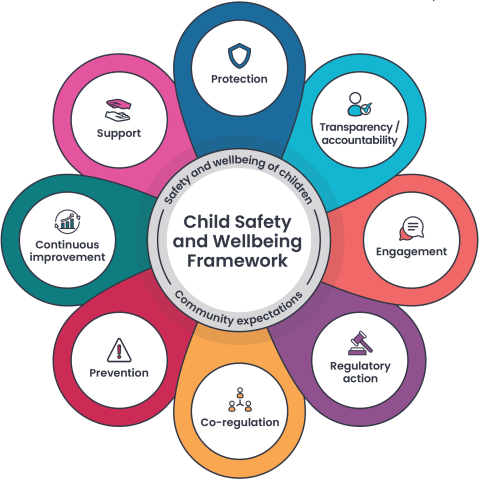
Child Safety and Wellbeing Framework

Our Child Safety and Wellbeing Framework outlines how we promote and protect child safety across all areas of our work. It reflects community expectations, professional standards and our regulatory responsibilities, and guides how we embed child safety into everything we do.

Image
Diagram of the child safety framework
Child Safety Project

Our Child Safety Project provides a coordinated, organisation-wide approach to strengthening how we protect the safety and wellbeing of children and young people. It focuses on key areas for improvement, including system-enabled data collection and monitoring, clearer and more consistent information-sharing practices, stronger compliance and enforcement, and improved collaboration with other child safety bodies.   

The project supports the Rapid Child Safety Review and ensures child safety is a central consideration across all our functions and within the broader child safety landscape. It will

  • provide strong governance and oversight of child safety actions across VIT  
  • identify interdependencies and reduce duplication
  • align initiatives with a shared, system-wide child safety strategy
  • promote consistent reporting, transparency and accountability for outcomes that keep children and young people safe
  • identify further opportunities to strengthen community confidence through improved visibility, coordination and central oversight of child safety actions.

If you have any questions about this project, please contact the Strategy team at strategy@vit.vic.edu.au

Suitability to teach and Working with Children Check exemption

Teachers who hold current registration with VIT are exempt from holding a Working with Children Check (WWCC) as they are already carefully regulated by VIT.

While the WWCC scheme plays an important role in assessing suitability for child-related work, our regulatory framework involves a more detailed, profession specific assessment of suitability to teach, consistent with our statutory role.

We undertake comprehensive suitability assessments and consider a wide range of information, including

  • criminal record information (Australian and international)
  • Victoria Police notifications
  • WWCC notifications
  • employment notifications
  • complaints
  • notifications from other regulators or agencies
  • health information
  • other relevant information, including professional conduct history and external investigations.

These assessments help ensure teachers are safe to work with children and young people.

While teachers don’t need to hold a WWCC, they must notify Working with Children Check Victoria (WWCCV) if they undertake any paid or voluntary child-related work outside their teaching role. This includes providing details about

  • the person or organisation employing them for child-related work, or
  • any agency where they are listed as available to undertake child-related work.

For more information, see our FAQs > Working with Children page.

Working with other child safety bodies

Protecting children relies on strong partnerships. We work closely with other child safety bodies which includes co‑regulators, government agencies, employers and law enforcement to share child safety information where permitted, to help manage and reduce child safety risks.

Sharing child safety information helps to

  • prevent harm to children and young people
  • support informed decisions about suitability to work with children and young people
  • promote transparency and accountability
  • assure the community that child safety risks and concerns are known and visible across the child safety system
  • coordinate action effectively across child safety bodies.

For details about how we share information, see our Information Privacy Policy.

Mandatory reporting and professional learning for teachers

Teachers are mandatory reporters. This means they must recognise and respond when a child’s safety, health or wellbeing may be at risk, including by reporting concerns to the Department of Families, Fairness and Housing or Victoria Police.

Free online eLearning is available for all Victorian teachers through Protecting Children - Mandatory Reporting and Other Obligations (PROTECT).

For fully registered teachers, completing this training may contribute towards professional learning hours for annual registration requirements, aligning with descriptors 4.4, 6.2, 6.4, 7.1 and 7.2 of the Australian Professional Standards for Teachers (APST).

Was this webpage helpful?
Why not?