


Published 19 Oct 2026
Growing excellence: A whole-school approach to professional learning at Ilim College

Sefik Sahingoz – Director of Teacher Advancement
Ilim College
Professional learning plays an important role in strengthening teaching and practice across schools, helping staff build their expertise and better support learners. At Ilim College, a multi-campus independent P–12 Islamic school, leaders have developed a whole-school professional growth initiative that recognises the contribution of every staff member and supports continuous improvement across diverse roles.
In this Excellence in Teaching story, Director of Teacher Advancement, Sefik Sahingoz, discusses the development of the Exemplary Staff Growth and Development Initiative and the research that informed its design. He shares how the initiative supports staff to set meaningful goals, gather evidence of impact and engage in collaborative professional learning, with the long-term aim of improving outcomes for learners, families and the broader school community.
Could you tell us about the school?
At Ilim College, a multi-campus independent P-12 Islamic school, professional learning is guided by a clear vision: to raise exemplary individuals who benefit humanity. We view education as more than academic achievement. It also focuses on character, service, professional excellence and continuous growth.
With a diverse workforce, including teachers, education support staff, school leaders and executive leaders, we recognised that professional growth looks different across roles. We wanted a consistent approach that supports all staff while recognising their individual strengths, responsibilities and development goals.
In response, we developed the Exemplary Staff Growth and Development Initiative. The initiative encourages staff to engage in meaningful professional learning, identify an area of practice for growth, gather evidence of impact and contribute to a culture of continuous improvement across the school.
What inspired the development of this initiative, and were there any research findings or established models that influenced your thinking?
The initiative grew from a broader review of Ilim College’s vision, values and strategic priorities. As part of this work, I was a member of the staff research team where we explored how professional growth and wellbeing could be strengthened across the school.
The review found that many staff were already engaged in professional learning and improving their practice. However, opportunities to share expertise and connect learning across campuses were often limited.

To address this, we sought to create a more consistent and collaborative approach to professional development.
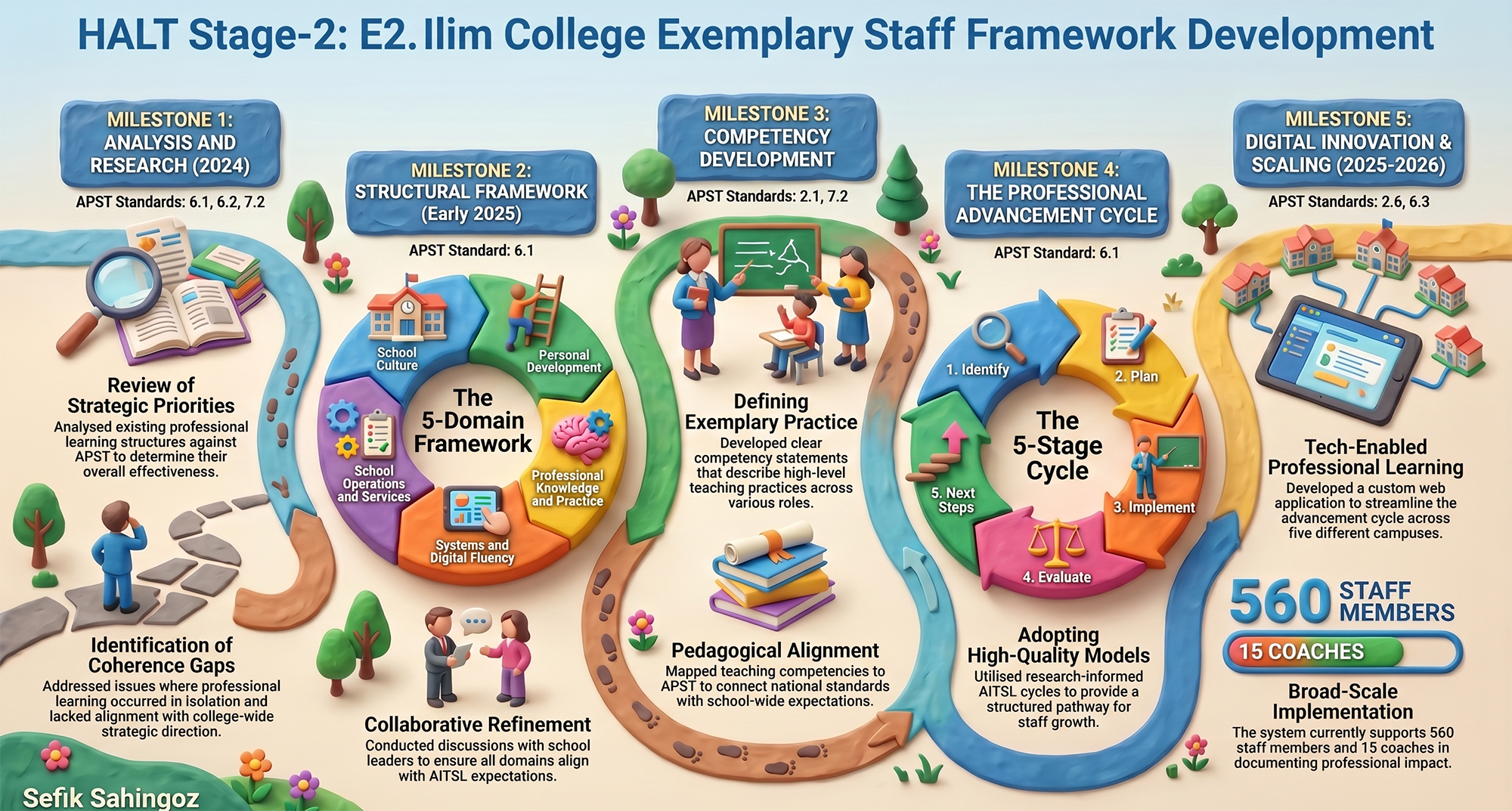
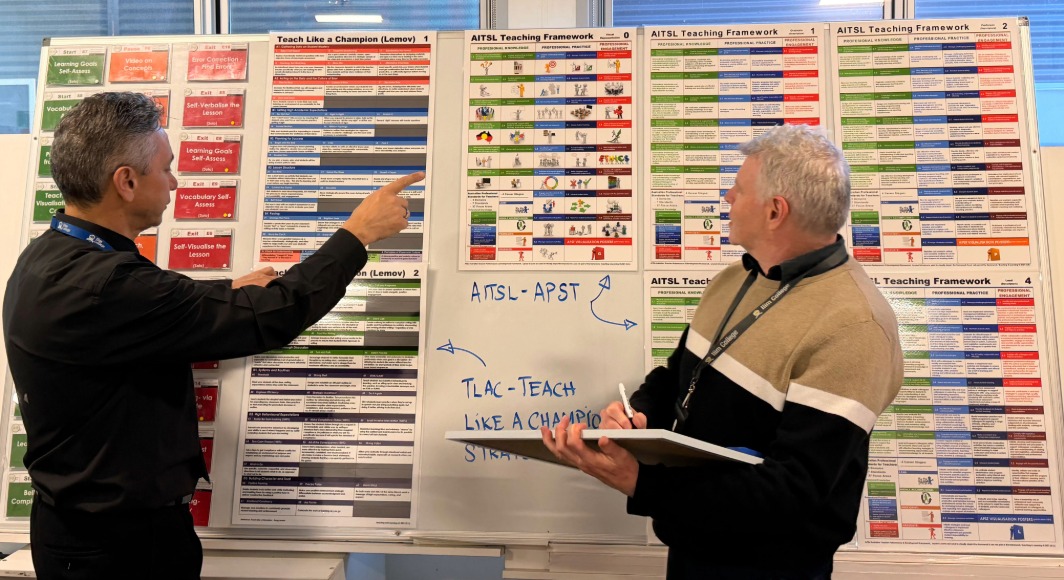
To inform the design, the team drew on evidence-based frameworks and resources, including the Australian Professional Standards for Teachers (APST), AITSL professional learning resources, the Classroom Practice Continuum, Cognitive Load Theory, High Impact Teaching Strategies, Understanding by Design, Professional Learning Communities and other evidence-informed approaches to teaching and learning. Rather than adopt one model, we developed an approach that reflected the school’s context and priorities.
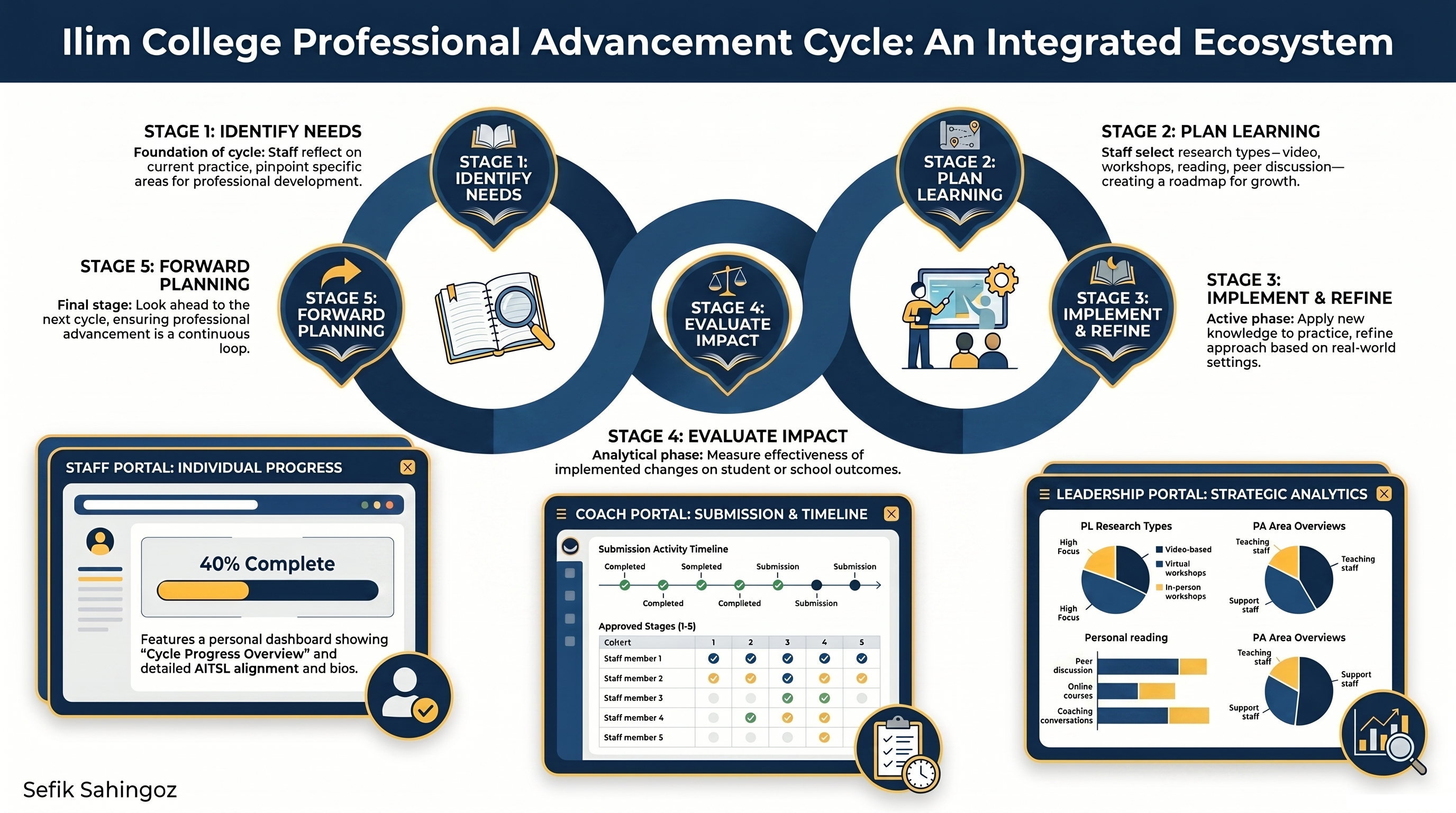
This work led to the Ilim College Exemplary Staff Growth and Development Framework (ESGDF) and a professional learning cycle that supports staff to identify goals, implement strategies, evaluate impact and plan next steps.
Click to enlarge
How is the initiative implemented and sustained across the school?
To support implementation, we developed a framework for professional growth and a structured professional learning process. All staff align their learning goals to the ESGDF, helping ensure their development connects to the school’s vision, strategic priorities and role expectations.
For teachers, this work is also linked to the APST, providing a clear connection between professional learning, evidence-formed practice and career development.
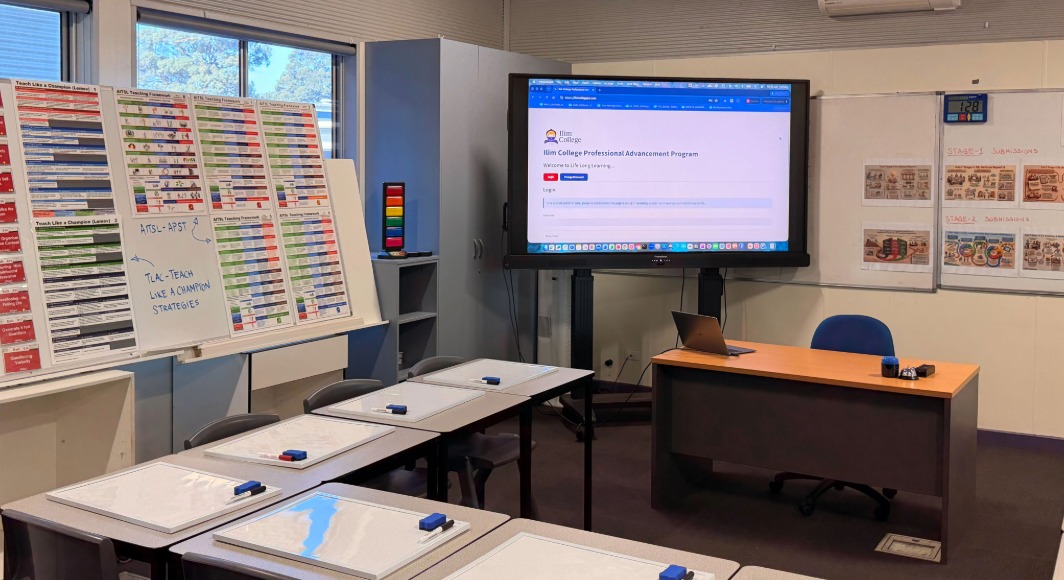
To support adoption across a large and diverse workforce, I designed an online application that enables staff to set goals, collect evidence, receive coaching feedback and track their progress throughout the professional learning cycle.
The platform also helps identify common learning priorities across the school, supporting collaboration through professional learning communities where staff can learn from and support one another.
What impact has the initiative had on staff growth and development?
One of the most significant outcomes has been the development of a shared approach to professional growth. Rather than viewing professional learning as a standalone activity, staff are encouraged to identify an area of practice to strengthen, engage in targeted learning and gather evidence of impact.
This has helped shift the focus from participation in professional learning to applying new knowledge in practice. Staff have greater clarity about their goals and can see how their learning connects to their role and, for teachers, the APST.
The initiative also gives staff flexibility to focus on areas most relevant to their work. For teachers, this may include assessment, feedback, questioning techniques or curriculum planning. For non-teaching staff, it may involve communication, workflow management, project coordination, digital systems, service delivery or stakeholder engagement.
Early implementation showed strong engagement, with staff applying new learning, collecting evidence and reflecting on their progress. The process has also strengthened professional conversations across the school.

We expect to see similar engagement this year as we support all 560 staff members with 15 coaches across our five campuses.
What impact has the initiative had on learners so far?
The initiative is still in the early stages of implementation, having commenced in February 2026. However, its purpose has been clear from the outset: to improve outcomes for learners by strengthening professional practice across the school.
A key feature of the approach is to focus on evidence of impact. Staff are encouraged to identify what has changed as a result of their professional learning and consider how those changes have impacted learners, colleagues or the broader school community.
Early trials provided promising examples. In one case, a teacher focused on a specific area of classroom practice and recorded improved student achievement through assessment data. While it is still too early to draw broader conclusions, these examples highlight the potential of targeted, evidence-informed professional learning to support learner outcomes.
Importantly, the initiative involves all staff, not just teachers. Whether through classroom practice, wellbeing support, administration or service delivery, each role contributes to a positive experience for students and families.
Over time, we hope to build a stronger understanding of how professional growth across all roles contributes to improved learner outcomes.
How do you plan to build on the initiative in the future?
The initiative is currently in its first full year of implementation, so our immediate focus is on learning from staff and coaches, reviewing what is working well and refining the approach over time.
A key priority is further defining what effective practice looks like across different roles. This will help ensure professional learning remains relevant, consistent and aligned with the school’s vision and priorities.
For teachers, we will continue strengthening alignment with the APST Teachers and evidence-informed practice.
We also see opportunities to support career development pathways for experienced teachers. The Professional Advancement Cycle encourages staff to demonstrate impact through evidence and reflection, supporting ongoing growth and leadership development.
Our long-term goal is to embed a culture where learning, collaboration and professional growth are part of everyday practice.
Is there anything else you would like to share about the initiative?
A key strength of the initiative is its whole-school approach. It recognises that professional growth is relevant to every role and that improvement is strengthened when staff learn from one another.
The initiative builds on the expertise already present within Ilim College by creating opportunities for staff to share knowledge, evidence and experiences across teams and campuses.
The framework provides a shared direction, while the professional learning cycle offers practical tools to help staff turn goals into action and evaluate their impact.
Ultimately, the initiative aims to strengthen professional practice and collaboration across the school, supporting positive outcomes for learners, families and the wider school community.