






Published 22 Jun 2026
Learning through emotions – Valley Brook Uniting Kindergarten

Komal Sachdev – Service Lead and Early Childhood Teacher
Valley Brook Uniting Kindergarten
Schools and early childhood services across Victoria continue to provide quality learning experiences across all levels. Our Professional Practice team is privileged to see this work firsthand on visits to workplaces around the state. Here is just one example spotlighting the great work happening in a Victorian early childhood setting.
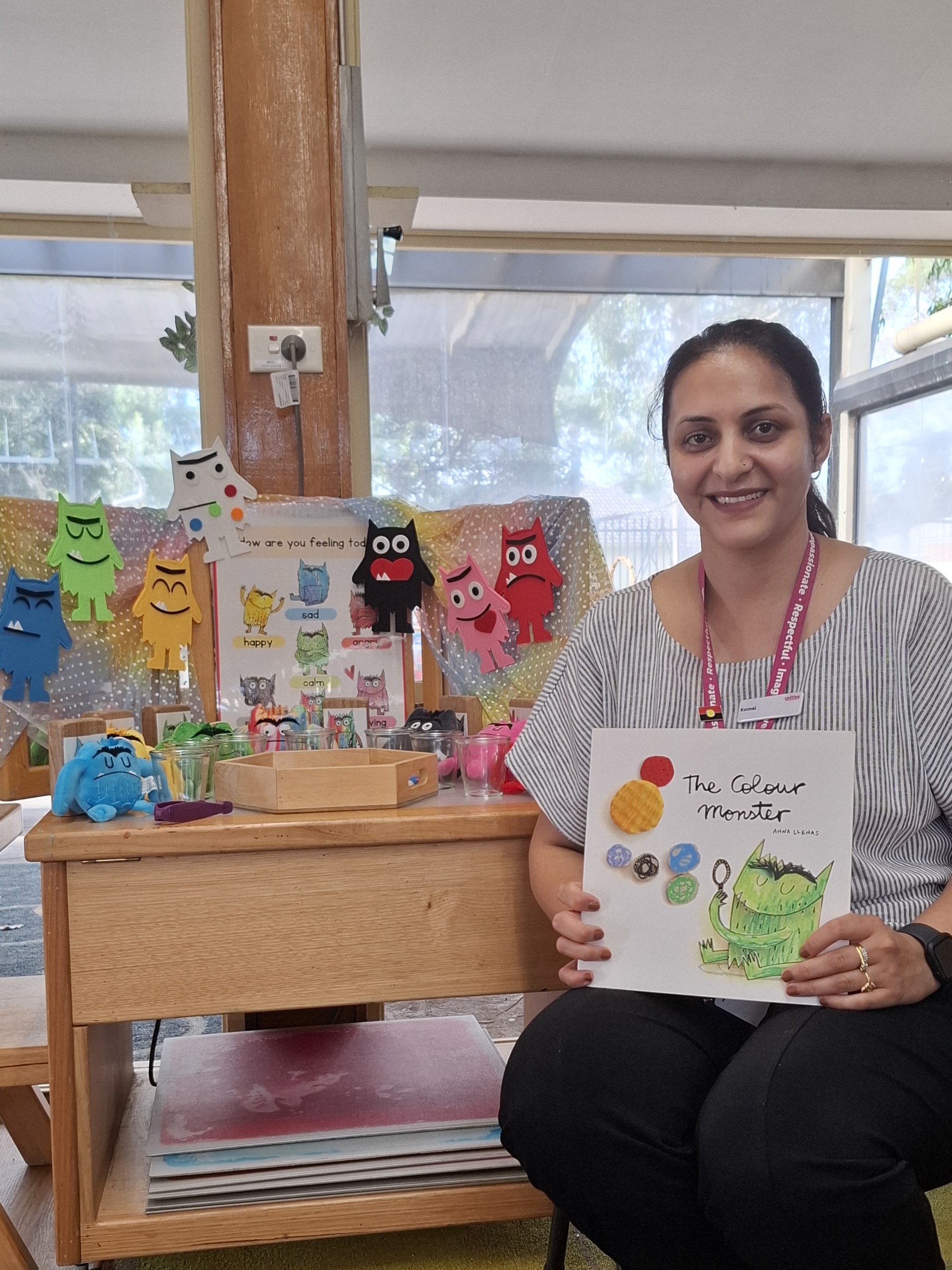
Komal Sachdev is a kindergarten teacher at Valley Brook Uniting Kindergarten, an early childhood service in South-East Melbourne. We spoke with Komal about embedding ‘The Colour Monster’ into her teaching to support children’s learning through emotions, as well as explored how this approach has positively impacted both educators and children.
Could you tell us about your education setting?
Valley Brook Uniting Kindergarten is a standalone early childhood service located in Hampton Park, South-East Melbourne. Our kindergarten is part of Uniting, a not-for-profit organisation dedicated to supporting and strengthening communities.
At Uniting, we are guided by four core values: compassion, boldness, imagination, and respect. These values underpin our approach to early childhood education and shape the way we interact with children, families, and the wider community.
Situated in the heart of Hampton Park, our service is part of the City of Casey local government area. We take pride in our strong connections with the local community and actively collaborate with a range of organisations and services. These include the local library, Bunnings, swim schools, dance and karate schools, as well as community services including the fire brigade and police.
We believe that building meaningful community partnerships enriches children’s learning experiences and fosters a strong sense of belonging for both children and their families.
What inspired you to pursue this approach?
A couple of years ago, I participated in professional development focused on learning through emotions. This experience highlighted how important it is for both educators and children to recognise and express emotions in meaningful ways. It prompted me to reflect on my own practice and how I could better support children’s emotional development through play.
Following this, I began introducing puppets into the classroom to help children explore concepts such as kindness, empathy, and understanding different feelings. The puppets provided a safe, engaging, and non-threatening way for children to express emotions and talk about their feelings. We now have a class puppet called Calm Tommy.

‘The Colour Monster’
Later, my mentor introduced me to the book, ‘The Colour Monster’, which became a turning point in my approach. I observed a non-verbal child engaging deeply with the story, smiling and painting the yellow monster to represent happiness. This powerful moment reinforced my understanding that language should not be a barrier to expressing emotions.
Inspired by this, I began to intentionally explore ‘The Colour Monster’ through a range of experiences that supported different forms of expression including art, movement and play. We have revisited the book multiple times this year, and with each reading, children have demonstrated increased engagement and a deeper understanding of emotions.
In our setting, we have children from diverse cultural and linguistic backgrounds, where language can sometimes be a barrier. While being mindful of this, we prioritise building strong connections with children through shared experiences, visual supports, and opportunities for emotional expression.
This journey has shaped our ongoing commitment to creating an inclusive environment where every child feels seen, heard, and empowered to express themselves in their own way, regardless of language.
What specific processes or resources do you rely on to support the implementation, and what practical steps have you taken to ensure your approach is sustainable?
To support the implementation of this approach, we follow a consistent and intentional process that builds children’s understanding over time.
We begin by introducing ‘The Colour Monster’ book and reading it multiple times to ensure children become familiar with the story and the connection between colours and emotions. Repetition helps build confidence and understanding for all learners, particularly those from diverse language backgrounds.
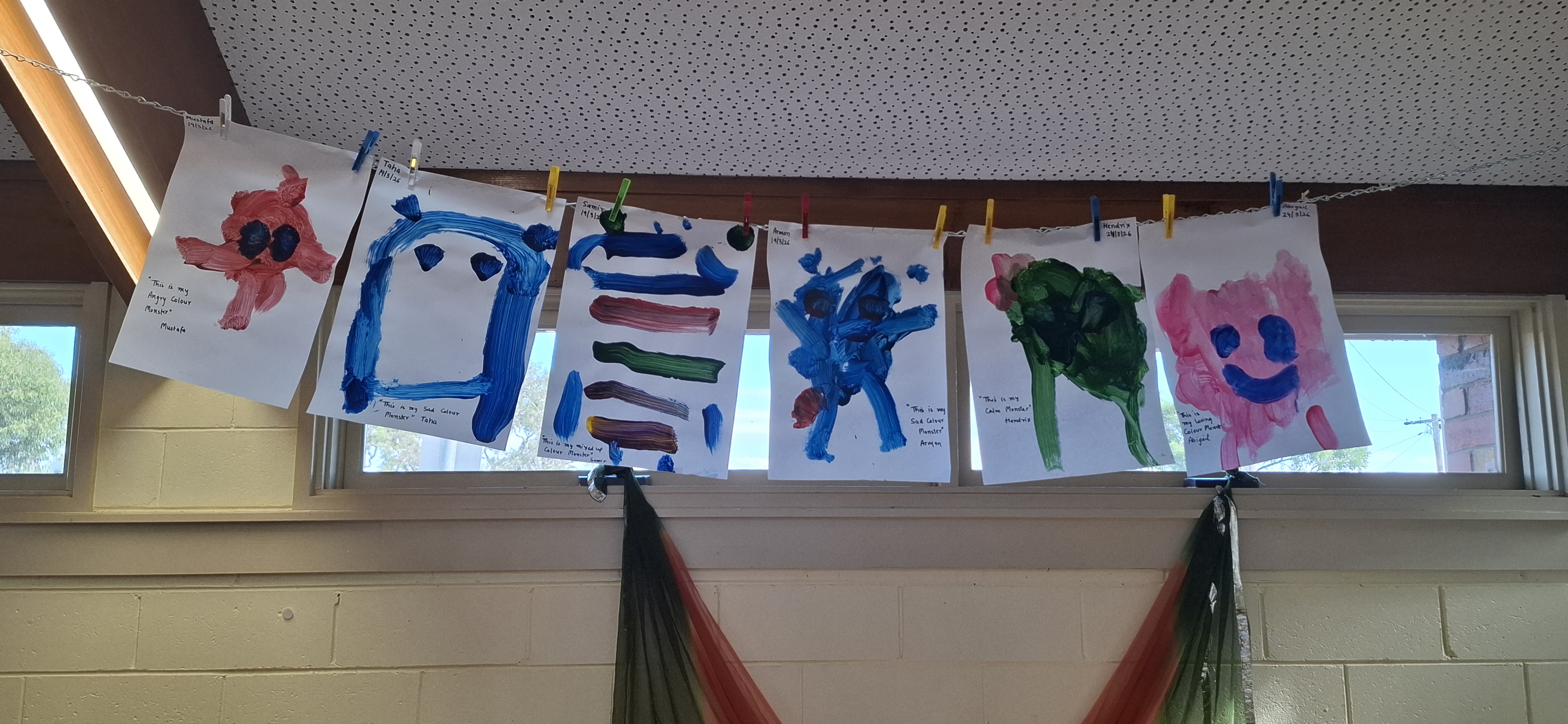
We then extend the learning by adding visual supports. For example, we place images of the Colour Monster on an easel, where children can paint their emotions using colours. During this process, we engage children in conversations by asking questions such as, “how are you feeling?” and “why do you feel this way?”, which support their ability to reflect and express themselves.

A hands-on approach
To make the learning more interactive and sustainable, we have introduced a hands-on experience using wooden blocks with Colour Monster images attached, along with any available and reusable jars or glasses and colourful pom-poms. Each morning after signing in, children are invited to choose a pom-pom and place it into a jar using tongs, pegs, or their hands, to represent how they are feeling that day.
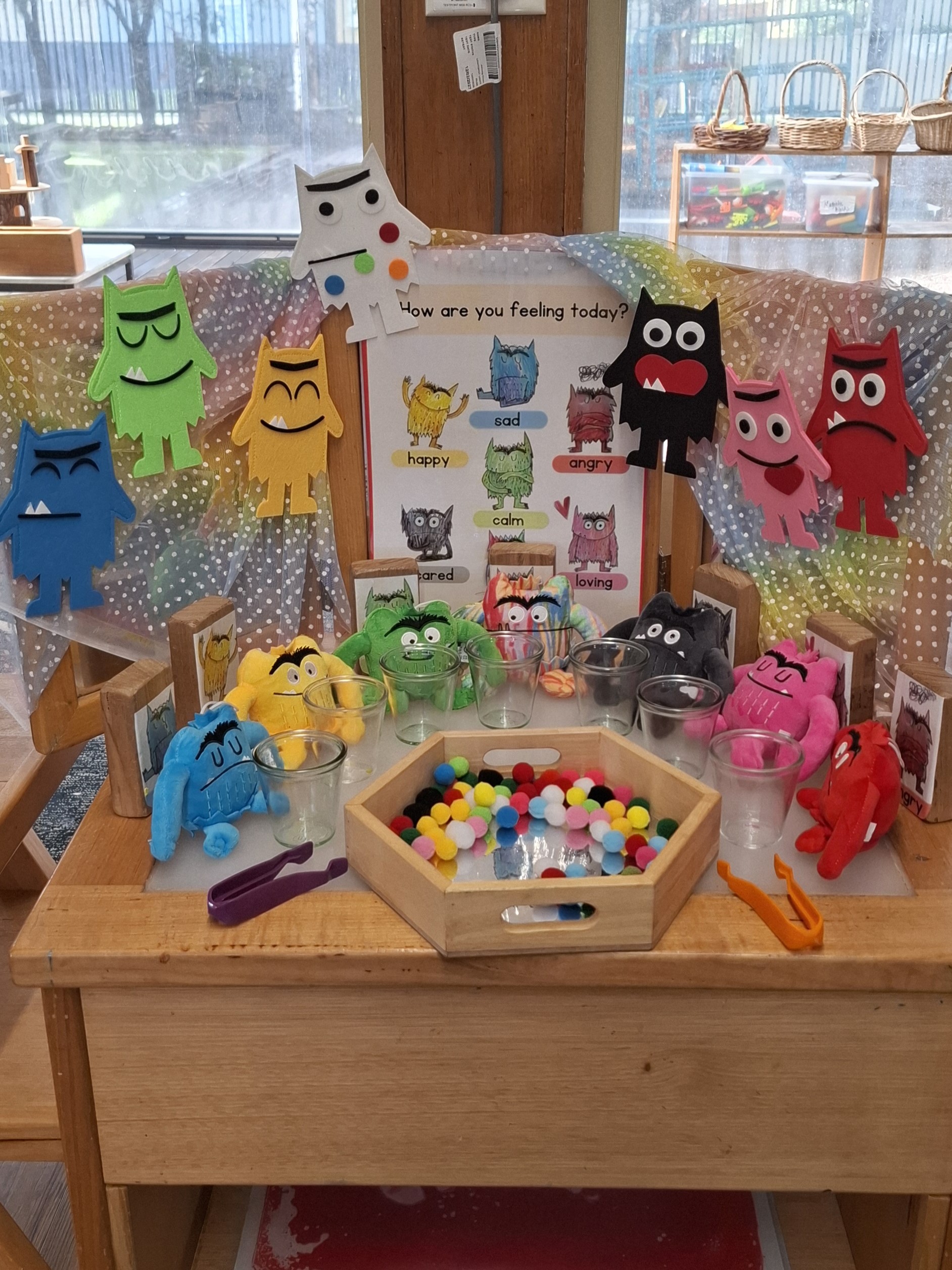
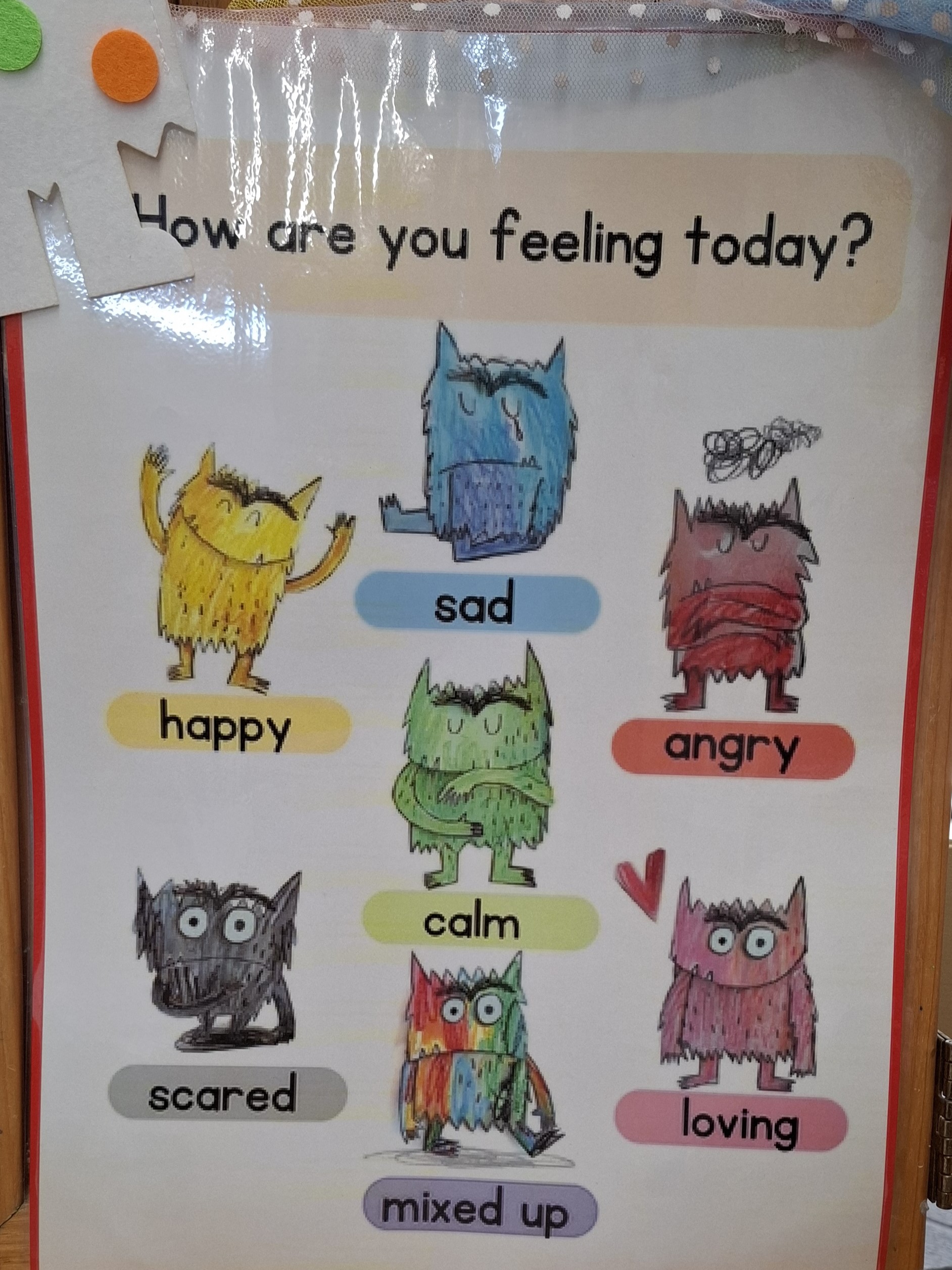
This daily routine has become an embedded practice in our program. It provides a consistent opportunity for children to express their emotions in a non-verbal and meaningful way. It also opens discussions about emotions, where we talk together about how we can support our friends to feel happy, calm or safe.
For example, one child shared that she was feeling sad because her dog had passed away the previous year. This led to a group discussion about ways to feel comforted, such as remembering happy moments spent with loved ones. These conversations support children in developing empathy, emotional awareness and strategies for managing their feelings.
We have further extended this learning through sensory and creative experiences. Children have opportunities to make their own Colour Monsters using air-dry clay and paint. They take their Colour Monsters home to help strengthen the connection between their home and the kindergarten. Additional resources – colouring sheets, crowns, and mask-making using pop sticks – are used to help children explore emotions through different forms of expression.
We also introduced The Colour Monster Doctor to deepen children’s understanding of caring for emotions. As children build confidence, we extend their learning by introducing the Zones of Regulation and link these concepts back to the Colour Monster, supporting emotional regulation and self-awareness.

Sustainability of Practice
This is a sustainable approach because it is embedded into our daily routine, uses low-cost and reusable materials, and is adaptable based on available resources. It also evolves with children’s interests and developmental needs. As a team, we continuously reflect on our practice and build on children’s ideas, ensuring the approach remains meaningful, inclusive, and responsive.
How has this approach supported staff development, and can you share some examples of how staff have grown or adapted through their involvement?
This initiative has had a strong positive impact on staff development, particularly in building meaningful relationships with children from diverse cultural backgrounds. As many children speak English as an additional language, staff have grown more confident and creative in overcoming communication barriers.
Our educators now use a wider range of approaches, including expressive body language, visual media, art and shared reading, to initiate and sustain engagement. As a result, their practice has become more inclusive, adaptable, and culturally responsive.
Staff are better equipped to support children’s participation and sense of belonging, regardless of language differences. This has also strengthened teamwork, with educators actively sharing strategies and learning from one another.
How has this approach affected learner outcomes, and can you share any examples that highlight their improvements?
This approach has had a very positive impact on learner outcomes, particularly in building children’s confidence, communication, and participation.

Self-expression through art
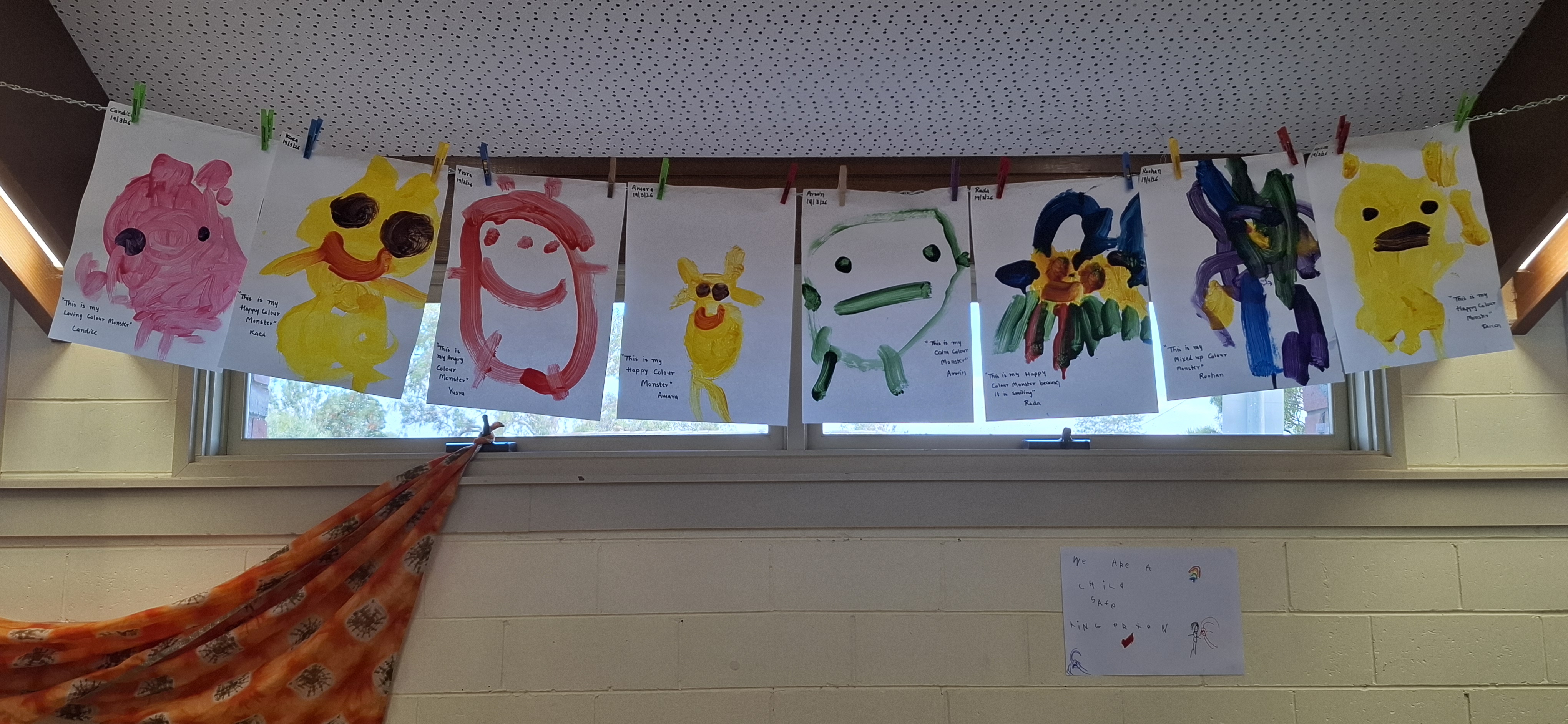
For example, a child who recently joined our centre initially relied on hand gestures, as English was not her first language, which made it difficult for her to fully engage in group experiences. Through the introduction of the Colour Monster, we identified her strength in expressing herself through art. She began creating colourful Colour Monsters and started using single words like “happy,” “loved,” and “sad” to describe her work – an important step in her language development.
Art and visual expression helped bridge the language barrier, giving her a comfortable way to communicate her feelings. Over time, her confidence grew, and she became more engaged in group learning. For instance, during group discussions about emotions, she proudly contributed by adding a pom-pom into a jar to represent how she was feeling.
This example highlights how the approach not only supported language development, but also emotional expression, confidence, and a stronger sense of belonging.
How is your workplace planning to build on and sustain this approach in the future, and how do you see this initiative evolving over time?
Our workplace plans to build on this approach by introducing more hands-on, creative experiences that support children’s emotional expression and communication. Our key next step is exploring emotions through natural materials – leaves, stones, sticks, twigs, shells, grass, and flowers – allowing children to create facial expressions and represent feelings in a meaningful, non-verbal way.
We also plan to regularly incorporate puppets into our program to act out social stories, helping children develop their social and emotional skills, understand different situations, and build language through engaging and interactive experiences.
Later in the year, we aim to introduce a Take-Home Teddy program to extend learning into the home and strengthen connections with their families.
Overall, we see this initiative continuing to evolve through consistent, inclusive, and engaging practices that support children’s communication, emotional development, and sense of belonging.
Can you provide any additional relevant information?
We strive to create a genuine sense of belonging for every child through our individualised approach and focus on emotional development. By building positive, trusting relationships with families, we support each child to grow, feel secure, and truly flourish.